
How to Use Journaling to Stay Focused on Your Fat Loss Goals.
The Complete Guide to Using a Journal for Weight Loss, Motivation & Consistency.
Staying consistent with fat-loss goals is often harder than starting them. Motivation fades, cravings appear, routines change—and before you know it, progress slows. Journaling is one of the simplest and most powerful tools to stay focused, track patterns, and stay accountable throughout your fat-loss journey.
In this guide, you’ll learn exactly how to use journaling to lose fat, different journal styles, what to write daily, and proven strategies to stay motivated.
Why Journaling Works for Fat Loss.
Journaling improves fat loss because it connects your thoughts, behaviors, and actions in a clear and measurable way. Here’s why it works:
1. Increases Self-Awareness.
When you document decisions, meals, and emotions, you recognize:
- Why you overeat.
- What triggers cravings.
- Which habits help you stay on track.
2. Strengthens Accountability
Writing down your goals makes you far more likely to follow through.
It becomes a private contract with yourself.
3. Tracks Progress You Can Actually See.
The scale doesn’t always show progress—but your journal will:
- Better sleep.
- Improved energy.
- Reduced cravings.
- Better habits.
4. Helps Manage Stress and Emotional Eating.
Many people gain weight from stress.
Journaling reduces stress by giving your mind a place to unload thoughts.
Types of Journaling for Fat Loss.
There isn’t one perfect way to journal. Choose a style that is easy and enjoyable so you stay consistent.
1. Food Journaling.
You simply write what you eat, when you eat, and how it makes you feel.
Great for:
- Emotional eaters.
- People who want to track calories or macros.
- Identifying “problem foods”.
2. Habit & Routine Journaling
Focuses on tracking small habits that lead to long-term fat loss, such as:
- Drinking water.
- Daily movement.
- Sleep.
- Protein intake
Perfect for people who struggle with consistency.
3. Mindset Journaling.
This method helps you stay mentally strong and focused.
You write about:
- Your motivation.
- Your challenges.
- How you feel today.
- What you’re grateful for.
Perfect for people who lose focus or feel discouraged.
4. Goal-Tracking Journaling.
You track weekly or monthly goals such as:
- Fit into jeans.
- Lose 2 lbs.
- Reduce sugar intake.
- Stick to your morning routine.
Great for long-term planners.
How to Start a Fat Loss Journal (Step-by-Step).
Here’s a simple framework anyone can follow:
Step 1: Define Your Fat Loss Goal Clearly.
Examples:
- “Lose 10 pounds in 8 weeks.”
- “Drop my body fat from 30% to 25%.”
- “Eat 80% whole foods for 30 days.”
Write your main goal at the top of your journal.
Step 2: Break It Into Weekly Action Steps.
Weekly steps keep you focused and prevent overwhelm.
Example:
- Walk 7k steps daily.
- Drink 2 liters of water.
- Follow your meal plan 5 days per week.
- Track macros Monday–Friday.
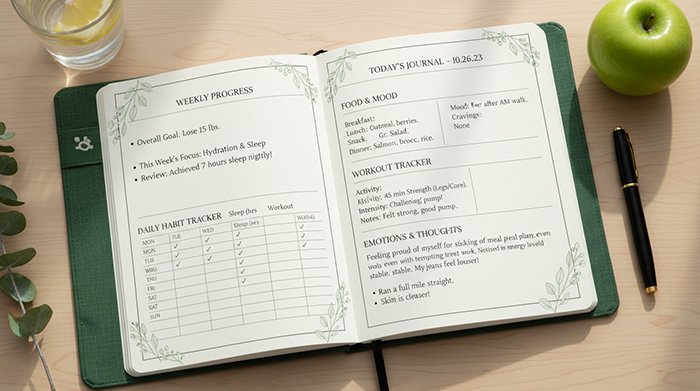
Step 3: Write a Simple Daily Entry.
Your journal entry can be as short as 3–5 minutes.
Daily journaling template:
- Today I will focus on:
- What I ate today / how it made me feel:
- Movement / exercise:
- Energy, cravings, mood:
- What I’m proud of today:
- What I will improve tomorrow:
Step 4: Review Weekly
Weekly check-ins help you understand what’s working.
Record:
- Wins.
- Challenges.
- Weight or measurement changes.
- New patterns you notice.
- Adjustments for next week.
What to Write in Your Fat Loss Journal (Daily Prompts).
Here are the best prompts to help you stay mentally and emotionally committed:
Morning Prompts:
- “My top priority for fat loss today is…”
- “One habit I want to strengthen is…”
- “Today I will avoid…”
- “I am committed to my goals because…”
Evening Prompts:
- “What went well today?”
- “What triggered cravings or overeating?”
- “How did my body feel after today’s meals?”
- “What can I do better tomorrow?”
Mindset Prompts:
- “I am proud of myself for…”
- “What is one limiting belief I want to break?”
- “What excites me about the new version of me?”
These prompts keep your mind aligned with your goals.
# Tips to Make Journaling More Effective for Fat Loss
1. Be honest—even when it’s uncomfortable.
Your journal is a judgment-free zone. The more honest you are, the more patterns you discover.
2. Track emotions, not just food.
Most setbacks are emotional, not physical.
3. Keep your journal visible.
On your nightstand, desk, or kitchen counter.
4. Don’t skip bad days.
Bad days teach you more than perfect days.
5. Combine journaling with habit tracking
A simple habit tracker boosts motivation.
How Journaling Helps You Break Bad Patterns
Regular journaling reveals:
- When you eat out of boredom.
- Which foods cause bingeing.
- When your willpower is lowest.
- Whether you skip meals (leading to overeating later).
Once you see the patterns, you can fix them.
Journaling Is a Fat-Loss Superpower.
Fat loss isn’t just about diet or exercise—it’s about consistency, mindset, and self-awareness. Journaling helps you stay focused, overcome emotional triggers, stay accountable, and track real progress.
If you’re struggling to stay on track, journaling can transform your journey and help you stay committed long enough to see results.